
My Dearest
I love historical K-dramas, as my introduction to South Korean dramas was Jewel in the Palace, and it was a true jewel, hard-to-top, historical drama. But my review today is about another gem of a K-drama.
My Dearest is a 21-episode historical drama that centers around the lives of noble woman Yoo Gil-chae and man of mysterious past Lee Jang-Hyeon. The first half of the drama is loosely based on Gone with the Wind, but the war that takes place in the K-drama is that between Joseon and the Qing.
The first few episodes are light and somewhat comedic as we are introduced to the main leads and the relationship between the two. We also get to know the supporting cast and come to care for them and fear for their lives throughout the war.
The drama heavily features political and moral themes. It is also rampant with violence, both physical and sexual, although the latter is implied rather than explicit. Which makes it at times a dark and heavy watch. It was not an easy watch as I’m sensitive to bloody scenes and references of sexual assault, but as I pushed through it I found out it was worth the heart ache. Just keep a box of tissues at hand.
It has been a long while since I watched any dramas after When Life Gives You Tangerines (if you want to read a review of that one let me know in the comments below), as that drama was the hard-to-achieve perfect mix of heart-warming and heart-breaking. Although My Dearest is mostly heart-breaking, the few dispersed sunshine moments here and there truly make it worth your time.
[Spoiler Alert]
I found the most romantic, most devoted, and most tender confession of love in My Dearest. In my favourite scene, Gil-chae wanted to tell Jang-Hyeon what she had to endure during her time in Shenyang, and he responded:
Don’t you realize that I want you in all your states? Poor Gil-chae, rich Gil-chae, impudent Gil-chae, obedient Gil-chae, Gil-chae that doesn’t love me, and Gil-chae that loves me.
To which she asked: What about Gil-chae who was violated by barbarians?
And his answer was: Then I must hold you, for you must have suffered.
ALL THE LOVERS IN THE NIGHT
The novel tackles themes of loneliness and alienation in the life of quiet and timid Fuyuko Irie. It is more of a character study than a plot-driven novel. Because plot-wise, nothing much happens in this slow paced novel, but the focus was mostly on the main character and her desolate inner world.
by Mieko Kawakami
A QUICK BOOK REVIEW
The novel tackles themes of loneliness and alienation in the life of quiet and timid Fuyuko Irie. It is more of a character study than a plot-driven novel. Because plot-wise, nothing much happens in this slow paced novel, but the focus was mostly on the main character and her desolate inner world.
The characters are believable and relatable, and eventually Fuyuko grows out of her despair and heart-wrenching loneliness into an aloneness that she handles pretty well. The prose is easy to read with vivid descriptions and beauty embedded within its lines.
It might not be for every one if you don’t enjoy reading between the lines to learn how a person is feeling, as it’s a character-driven, show don’t tell type of book: paints a picture of the world the character is living in (the weather, the smell, the textures, etc..) to induce the feelings of the main character.
“I felt the unread pages dwindling in my grip until I finally turned the last page and shut the book. The sound was far louder than it should have been, or at least it seemed that way. The following day, once I had finished work and spent a little time drinking and doing nothing, I climbed into bed only to realize that I had no way to occupy myself, which gave rise to an unspeakable loneliness, although I had no idea what it was that made me feel so lonely.”
Trigger warnings: sexual assault and substance abuse.
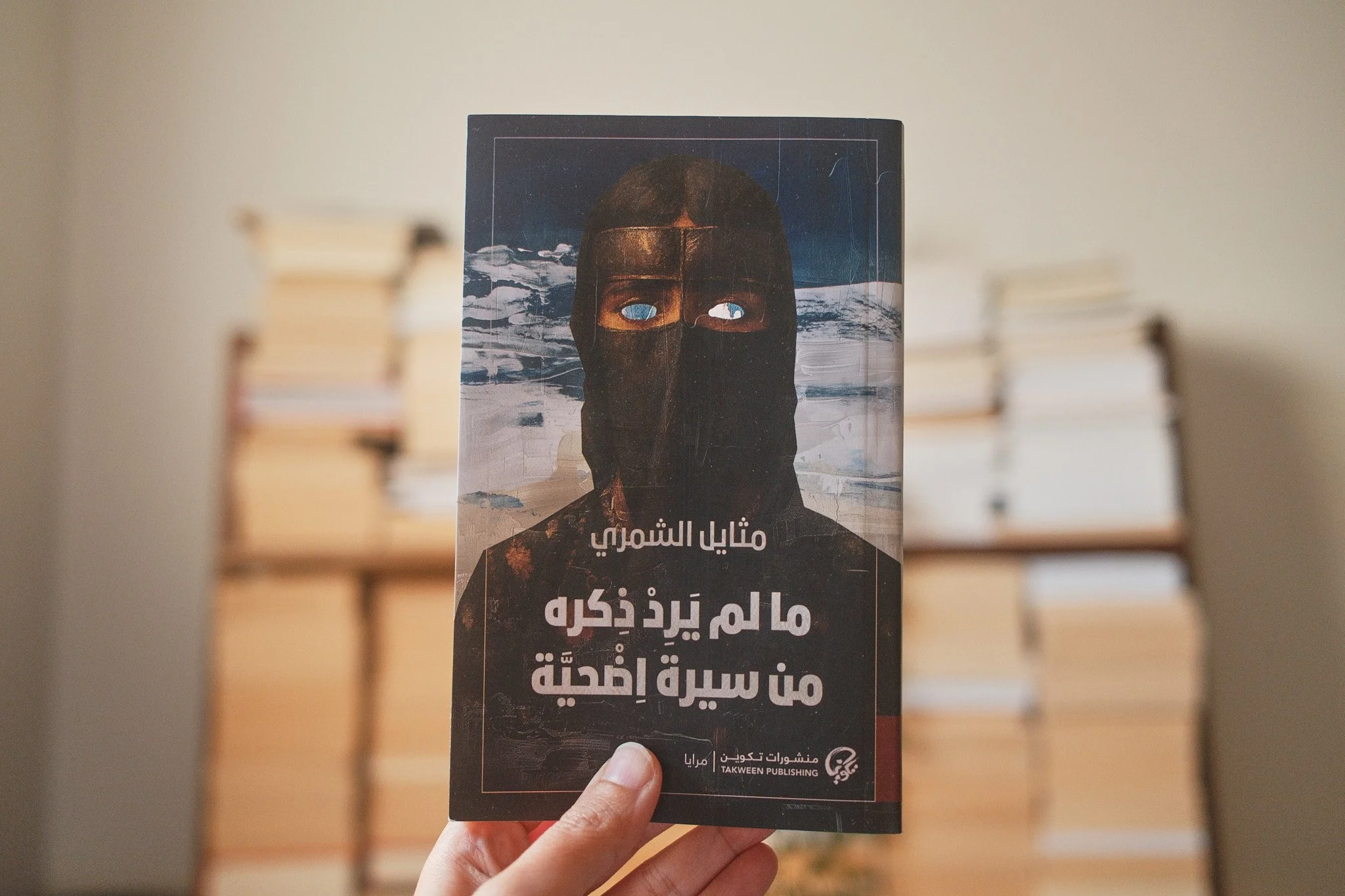
ما لم يَرِدْ ذِكره من سيرة اِضْحيَّة
جذبني العنوان المثير للفضول، و زرقة الغلاف، أعرف، أعرف، لا يجدر بي الحكم على الكتاب من غلافه، لكني ممن تستدرجهم الأغلفة الغامضة. كما شدّني حين أمسكتها حجمها… فلم أقرأ رواية عربية منذ زمن. قراءاتي مؤخراً غلبت عليها الإنجليزية، وبعض الترجمات العربية للغات غيرها. لكن الروايات العربية لم تتصدر قائمتي للكتب التي أريد أن أقرأها، حتى جاءت هذه الرواية.
جذبني العنوان المثير للفضول، و زرقة الغلاف، أعرف، أعرف، لا يجدر بي الحكم على الكتاب من غلافه، لكني ممن تستدرجهم الأغلفة الغامضة. كما شدّني حين أمسكتها حجمها… فلم أقرأ رواية عربية منذ زمن. قراءاتي مؤخراً غلبت عليها الإنجليزية، وبعض الترجمات العربية للغات غيرها. لكن الروايات العربية لم تتصدر قائمتي للكتب التي أريد أن أقرأها، حتى جاءت هذه الرواية.
تتحدث سيرة اِضحية عن سلطان وسالم واِضحية الذين تدور بينهم علاقة ثلاثية الأطراف ديناميكيتها قديمة قدم الزمن، لكن السياق البيئي يخرج بها عما نعهده في السرد التقليدي لديناميكية كهذه. فالشخصيات، خاصة اضحية، تبدأ باتخاذ مساحة من اهتمامك وانشغالك بها (وخوفك عليها أحياناً) أكثر مما يتوجب في عمل قصير كهذا. فتنجح في التغلغل لتصل إلى أعماقك وتحرك آلاماً تعرفها جيداً كل امرأة لم تُسأل عمّا تريد، ويعرفها جيداً كل من يميل قلبه بالعطف والحنو على امرأة كهذه.
انتهيت من الرواية في ”قعدة“ واحدة. أسلوب مثايل سلس وانسيابي على نحو نادر، ربما يحسن وصفه بالسهل الممتنع. مما يجعل الرواية عوداً حميداً للروايات العربية لأمثالي ممن طال غيابهم عنها.
ما لم يرد ذكره من سيرة اضحية رواية شدتني من أول صفحة وأبقتني أسيرة لها حتى النهاية. لغتها ماء رقراق، والشخصيات تنبض، والقصة مؤثرة. تستحق القراءة وتجعلني أتوق للقادم من مثايل.